
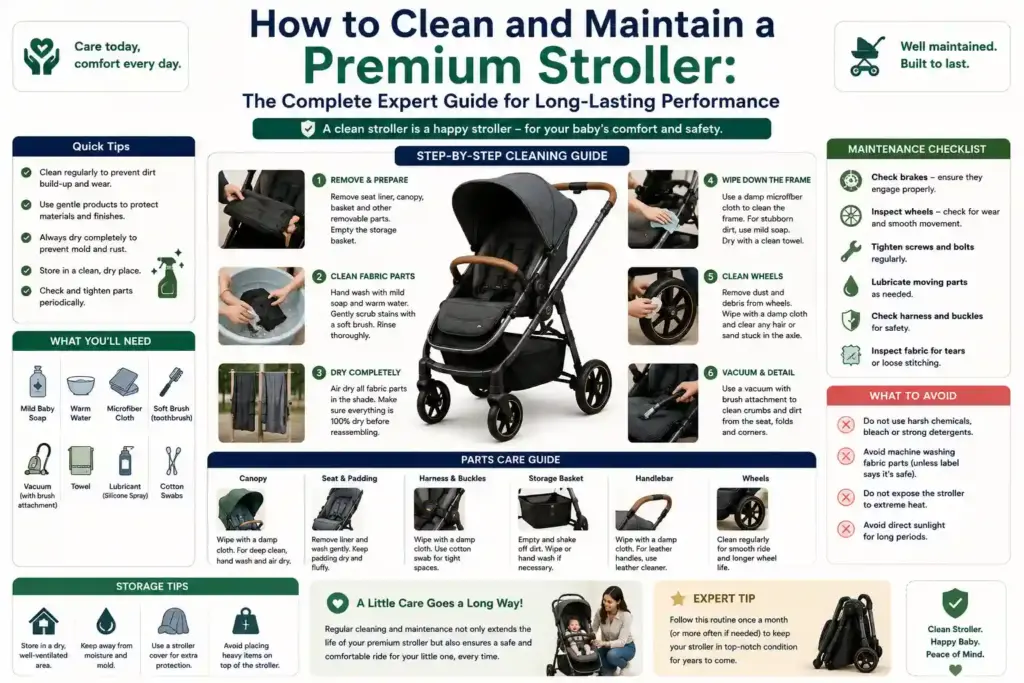
To clean a premium stroller properly, start by removing loose crumbs and dust, washing removable fabrics with a mild detergent, wiping down the frame with warm soapy water, and cleaning the wheels and wheel hubs where dirt tends to build up. Regular cleaning not only keeps the stroller looking fresh but also prevents grime, stains, and moisture from affecting its materials over time.
Maintaining a premium stroller goes beyond cleaning visible surfaces. You also need to inspect moving parts, keep wheel assemblies free from debris, lubricate folding joints and wheel hubs with a silicone-based lubricant, and store the stroller in a dry environment. These small maintenance habits help preserve smooth steering, reliable folding, and long-term durability.
Many parents focus on cleaning visible stains but overlook the areas that affect how a stroller performs. Dirt inside wheel hubs, folding joints, and harness buckles can gradually impact steering, folding, and overall longevity. A simple maintenance routine helps keep your stroller clean, safe, and running smoothly for years.
The Golden Rule of Premium Stroller Care
Before reaching for soap and water, remember one simple principle: clean gently, maintain consistently.
Premium strollers are built with high-quality fabrics, anodised aluminium chassis, precision bearings, and carefully designed locking mechanisms. Aggressive cleaning methods, harsh chemicals, and excessive water exposure often cause more damage than the dirt itself.
Before disassembling anything, take several photos of the harness routing, canopy attachments, seat fabric connections, and buckle positions using your phone. This simple step can save significant frustration when reassembling the stroller later.
Essential Supplies You’ll Need
| Item | Purpose |
| Microfiber cloths | Cleaning frame and hard surfaces |
| Mild baby-safe detergent | Fabric cleaning |
| Soft toothbrush | Tight corners and hinges |
| Handheld vacuum | Removing crumbs and dust |
| Warm water | General cleaning |
| Dry silicone lubricant | Wheel hubs and moving joints |
| Soft brush | Wheel and tyre cleaning |
When Does Your Premium Stroller Need a Deep Clean?
While quick wipe-downs should happen regularly, certain signs indicate it’s time for a thorough cleaning.
Look for:
- Sticky folding mechanisms
- Squeaking or resistant wheels
- Food crumbs trapped in seat creases
- Stained harness straps
- Dust buildup around wheel axles
- Musty odours from the canopy or seat fabric
- Reduced steering smoothness
Many parents notice performance issues long before they realise cleanliness is the underlying cause.
1. Deep Cleaning the Fabric Without Damaging Premium Materials
The fabric components often receive the most abuse. Milk spills, snack crumbs, dust, sunscreen residue, and unexpected accidents can quickly accumulate in the seat, canopy, and harness system.
Start With Dry Cleaning First
Never begin with water.
Shake out loose debris and use a vacuum attachment to remove crumbs, sand, pet hair, and dust from seams, storage baskets, canopy folds, and stitching lines.
This prevents dirt from turning into muddy residue during washing.
Remove Fabric Components Carefully
Most premium strollers allow the removal of:
- Seat covers
- Canopies
- Infant inserts
- Storage basket liners
- Seat padding
Check the manufacturer’s care instructions before proceeding.
A commonly overlooked detail is hidden canopy support rods or stiffening inserts. Many premium sun canopies contain plastic ribs or structural supports that should be removed before washing.
Wash Fabrics Correctly
Use cold or lukewarm water with a mild detergent.
If machine washing is permitted, select a delicate cycle. Otherwise, hand-wash the fabric gently and avoid aggressive scrubbing that may weaken textile fibres.
For stubborn stains:
- Food stains: Cold water first, then detergent
- Milk residue: Soak briefly before washing
- Mud stains: Allow mud to dry before brushing away
- Odours: Use baking soda before washing
The Shade-Drying Rule
One of the biggest mistakes parents make is drying stroller fabrics in direct sunlight.
Wet premium fabrics exposed to strong sunlight can develop uneven fading, weakened canopy tension, and premature ageing. Instead, air-dry fabrics completely in a shaded, well-ventilated area.
Never use a tumble dryer unless explicitly approved by the manufacturer.
2. Washing the Frame and Tight Spaces
A clean fabric seat may look great, but the stroller’s chassis determines how it actually performs.
The frame absorbs dirt from roads, parks, shopping centres, sidewalks, and travel environments. Dust and grit often accumulate in areas that are rarely inspected.
Cleaning the Chassis Properly
Mix warm water with a few drops of mild dish soap.
Use a microfiber cloth to wipe the entire frame, including:
- Handlebar
- Side rails
- Lower frame
- Footrest supports
- Folding arms
- Storage basket supports
Avoid abrasive pads that may scratch painted or anodised finishes.
Pay Attention to Hidden Areas
The most neglected sections are usually:
- Folding joints
- Recline mechanisms
- Locking latches
- Brake assemblies
- Harness anchor points
Use an old toothbrush dipped in soapy water to clean these tight spaces carefully.
If you frequently use your stroller near beaches, this step becomes even more important. Salt air and saltwater exposure accelerate corrosion, even on high-quality aluminium components. After every beach trip, wipe down the entire frame with fresh water and dry it thoroughly.
Removing Light Surface Rust
If you notice minor surface rust on exposed screws or chrome components, gently rub the area with a crumpled piece of household aluminium foil.
This surprisingly effective technique helps polish away light oxidation without scratching the surrounding finish.
3. Getting the Wheels to Glide Smoothly Again
A premium stroller should feel effortless to push.
If steering feels heavier than usual, wheels squeak, or the stroller drifts slightly to one side, the wheel assembly likely needs attention.
Remove Dirt From Wheels and Axles
If your stroller allows wheel removal, detach the wheels and inspect:
- Tire treads
- Wheel hubs
- Axles
- Brake components
Hair, grass, dust, and sand often wrap around axle spindles and gradually restrict movement.
Brush away debris and wipe the components with a damp cloth.
The Lubrication Mistake Many Parents Make
Many online guides recommend spraying standard WD-40 everywhere.
That approach creates problems over time.
Traditional WD-40 works primarily as a solvent and water displacer. While it may temporarily stop squeaks, it can attract dirt and strip protective lubrication from certain components.
Instead, use:
- Dry silicone spray lubricant
- PTFE-based lubricant
These products dry clean and help maintain smooth movement without attracting additional grime.
Apply lubricant sparingly to:
- Wheel hubs
- Folding joints
- Recline pivots
- Moving plastic contact points
Wipe away excess immediately.
Quick Troubleshooting Guide
Sometimes a stroller issue is not a manufacturing defect at all. A small maintenance adjustment often solves the problem.
| Problem | Likely Cause | Solution |
| The stroller pulls to one side | Hair wrapped around the axle or uneven tyre pressure | Clean the axle and check tyre inflation |
| Wheels squeak | Dry wheel hubs | Apply silicone lubricant |
| Folding feels stiff | Dirt trapped in hinges | Clean joints and lubricate |
| The brake feels sticky | Debris around the brake assembly | Brush and wipe thoroughly |
| Musty smell | Moisture trapped in fabric | Deep clean and air-dry completely |
4. Storage and Long-Term Care
Cleaning is only half the equation. Storage habits have a major impact on stroller longevity.
Never Store a Damp Stroller
Even slight moisture trapped beneath seat padding or canopy fabric can lead to:
- Mold growth
- Mildew odors
- Fabric deterioration
- Corrosion of metal components
Always allow every component to dry fully before folding or storing.
Choose the Right Storage Location
Store your stroller in:
- A cool, dry environment
- Indoor spaces with airflow
- Areas protected from direct sunlight
Avoid garages with excessive humidity or outdoor storage where temperature fluctuations can affect materials.
Monthly Maintenance Checklist
To keep performance at its best, spend five minutes each month checking:
- Wheel movement
- Brake engagement
- Harness condition
- Frame fasteners
- Folding mechanism
- Fabric cleanliness
This small routine can significantly extend the stroller’s lifespan and preserve its resale value.
Why Consistent Maintenance Matters for Premium Strollers
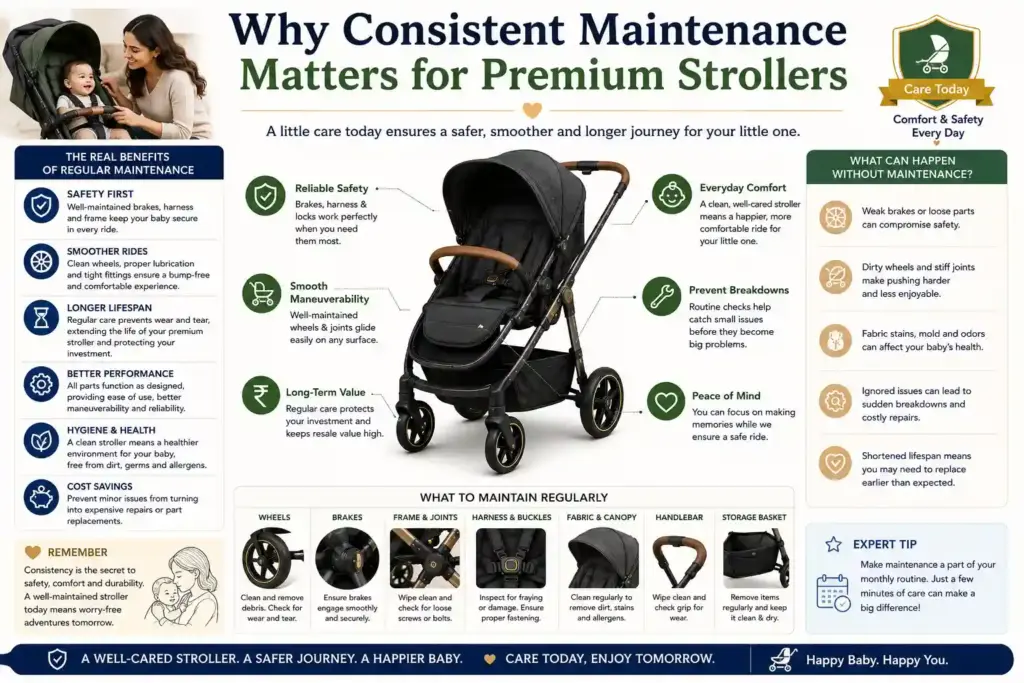
Premium strollers are designed to deliver years of reliable performance. However, even the most advanced suspension system, the strongest chassis, or the highest-quality textile cannot perform at its best when dirt and neglect accumulate.
Regular maintenance helps preserve:
- Smooth steering performance
- Folding mechanism reliability
- Fabric appearance
- Safety systems
- Wheel efficiency
- Long-term resale value
More importantly, it ensures your child continues to enjoy a comfortable and safe ride every day.
Coodlè: The Smarter Way to Buy or Rent Premium Strollers
Maintaining a premium stroller properly takes time, consistency, and attention to detail. While the effort is worthwhile, many modern parents prefer a more convenient approach to accessing premium baby gear.
That is where Coodlè comes in.
At Coodlè, we make it easier for families to access premium prams, strollers, and pushchairs without the traditional challenges of ownership. Whether you want to buy a high-quality stroller for long-term use or rent a premium model for travel, a growing family, or a temporary need, Coodlè offers a practical solution.
What makes Coodlè stand out is the ability to access carefully maintained premium baby gear through a trusted online platform. Instead of worrying about upgrading frequently or committing to a stroller before knowing whether it suits your lifestyle, you can explore premium options with greater flexibility.
For parents who value quality, convenience, and access to top-tier baby products, Coodlè has become one of the most reliable online destinations to buy or rent premium strollers, prams, and pushchairs.
The result is simple: you spend less time worrying about maintenance and more time enjoying every outing with your little one.
Final Premium Stroller Maintenance Checklist
Before you put your stroller away, run through this quick checklist to keep it performing like new:
Weekly
- Vacuum crumbs, dust, and debris from the seat, canopy, and storage basket.
- Wipe down the chassis, handlebars, and high-touch surfaces with a damp microfiber cloth.
- Check wheels for hair, sand, or dirt wrapped around the axles.
Monthly
- Deep clean removable fabrics according to the care label.
- Inspect the 5-point harness, buckles, and adjustment straps for wear or trapped dirt.
- Clean wheel hubs and folding joints, then apply a dry silicone or PTFE lubricant where needed.
- Test brakes, folding locks, and recline mechanisms to ensure smooth operation.
Every Season
- Inspect the frame for scratches, rust spots, or loose fasteners.
- Give the canopy, seat fabrics, and storage basket a thorough clean.
- If the stroller has been exposed to beach sand, monsoon rain, or heavy outdoor use, perform a complete deep clean.
Never Forget
- Take photos before removing straps or fabric components.
- Remove canopy rods or fabric stiffeners before washing.
- Air-dry fabrics completely in the shade.
- Never store the stroller while damp.
- Use silicone-based lubricants instead of standard WD-40 for long-term wheel and hinge care.
A well-maintained premium stroller doesn’t just look better—it steers smoother, lasts longer, retains more resale value, and provides a safer, more comfortable ride for your child.