
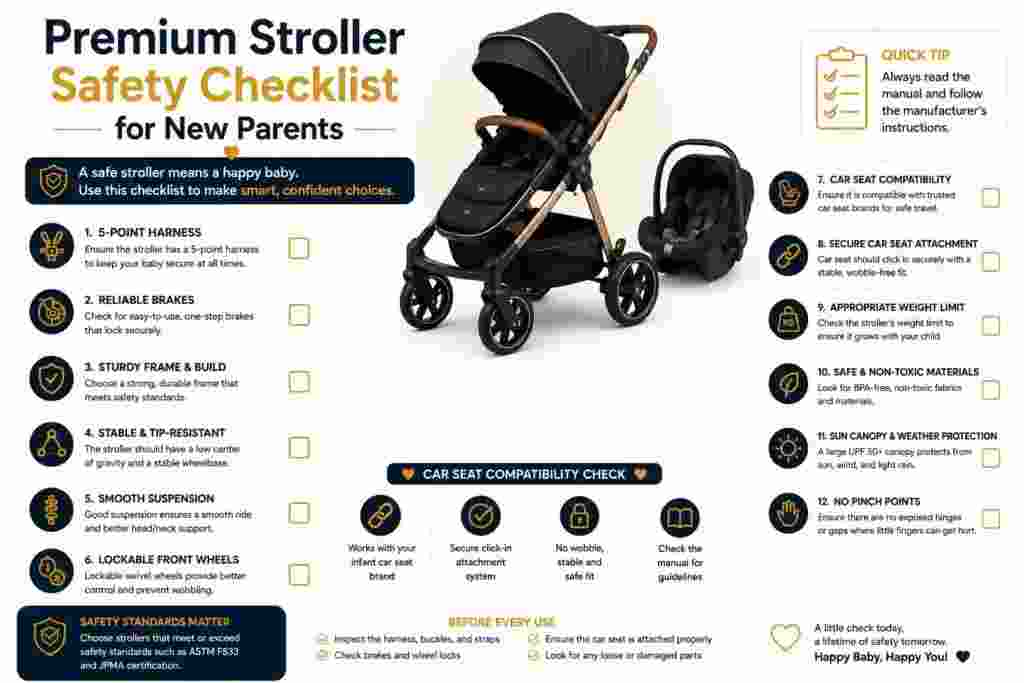
A premium stroller should do more than look luxurious. For newborns, the right stroller must provide a true flat recline, a properly fitted 5-point harness, reliable brake locking, stable frame construction, and safe airflow protection to reduce risks like airway compression, tipping, overheating, and unsafe posture support.
This guide explains the most important premium stroller safety checks every new parent should follow before daily walks, travel, or long outings. It also covers how parents can safely rent or buy premium stroller systems through Coodlè based on their baby’s changing developmental needs.
1. Newborn Airway & Recline Safety
The first six months are the most critical stage for stroller safety. Newborns do not yet have the neck strength to hold their head upright consistently, which means positioning matters far more than most parents realise.
Why a True Flat Recline Matters
A stroller advertised as “newborn-friendly” is not automatically safe for day-one use. Many models only partially recline, which can allow a baby’s chin to drop toward their chest and partially compress the airway.
For newborns, the safest setup is:
- A true 175–180° flat recline
- Or an approved bassinet attachment specifically designed for infant positioning
From a biomechanical perspective, this flat positioning keeps the spine neutral and reduces the risk of positional airway restriction during long walks or naps.
The Chin-to-Chest Warning Sign
Once your baby is placed in the stroller:
- Their chin should never rest tightly against the chest
- Their head should remain naturally aligned
- Their breathing should remain unobstructed
If the baby appears folded forward, the seat angle is too upright, or the harness requires adjustment.
Premium stroller systems available through Coodlè typically include advanced newborn configurations with fully flat recline systems, making them suitable for the earliest developmental stages.
2. Secure Harness Positioning
The harness system is one of the most important structural safety components in any stroller.
A proper premium stroller should use a 5-point harness, securing:
- Both shoulders
- Both hips
- Between the legs
This distributes movement forces evenly and prevents forward sliding during sudden stops or uneven terrain.
The Correct Harness Fit
A loose harness is almost as dangerous as not using one at all.
Use this quick safety check before every outing:
| Harness Check | Correct Setup |
| Shoulder straps | Flat, untwisted, resting at shoulder level |
| Waist straps | Snug without digging into clothing |
| Chest area | You should not be able to pinch excess webbing |
| Crotch strap | Properly connected every single time |
Even for a five-minute walk inside an apartment complex, the harness must always be secured completely.
3. Brake Discipline
Premium strollers glide extremely smoothly because of their suspension and wheel engineering. Ironically, that smooth movement can create a hidden risk: silent rolling on slight inclines.
Always Lock the Brakes Before Loading or Unloading
Never place your baby into the stroller without engaging the wheel locks first.
This applies to:
- Elevators
- Parking areas
- Apartment ramps
- Cafes
- Sidewalk slopes
- Mall floors
A premium braking system should lock both rear wheels simultaneously and hold the stroller firmly even under directional pressure.
The 3-Second Brake Test
Before every outing:
- Engage the brakes
- Push the stroller gently forward
- Confirm zero rolling movement
This takes less than three seconds but prevents one of the most common stroller accidents.
4. Chassis Stability and Tipping Risks
One of the biggest operational mistakes parents make has nothing to do with the baby seat itself. It involves weight distribution.
The Handlebar Overload Problem
Hanging heavy diaper bags or shopping bags from the stroller handlebars shifts the centre of gravity backwards. Mechanically, this creates a lever effect that can cause sudden rearward tipping.
This becomes especially dangerous when:
- The child leans sideways
- The baby is temporarily removed
- The stroller moves over uneven pavement
The Safe Cargo Rule
To maintain proper balance:
- Store heavy items only in the lower basket
- Avoid oversized bags on the handlebars
- Keep the stroller evenly weighted between the wheel axles
Premium strollers use stronger chassis systems, often built from aerospace-grade aluminium, but even high-end engineering cannot compensate for poor weight distribution.
5. Folding Mechanisms and Pinch-Point Hazards
Modern premium strollers use advanced folding systems with reinforced joints and locking hinges. While these mechanisms improve portability, they also create serious pinch risks during folding and unfolding.
Establish a Folding Safety Zone
Before collapsing or opening the stroller:
- Keep children at least several feet away
- Ensure fingers are nowhere near moving joints
- Confirm locking points fully engage after setup
A stroller should always produce an audible lock confirmation or tactile click once fully opened.
Stability Check Before Every Walk
Before moving:
- Push downward lightly on the handlebars
- Confirm there is no frame wobble
- Ensure the chassis feels rigid and stable
If the stroller shifts unusually or feels loose, stop using it immediately until inspected.
6. Wheel Tracking and Suspension Safety
Wheel quality affects more than manoeuvrability. It directly influences how much vibration transfers into the stroller seat.
What Premium Suspension Actually Does
High-end stroller suspension systems help:
- Reduce shock transfer on rough roads
- Stabilise the baby’s head and spine
- Improve wheel tracking on uneven surfaces
- Prevent sudden directional jerks
This matters significantly on Indian pavements, apartment ramps, cobblestones, and broken sidewalks, where constant vibration can disturb a newborn’s posture.
Your Weekly Wheel Inspection
At least once a week:
- Remove trapped debris
- Check wheel alignment
- Ensure wheels rotate smoothly
- Test swivel lock functions
Uneven wheel tracking often creates pulling resistance that parents may not notice immediately.
7. Canopy Ventilation and Heat Safety
Many parents focus heavily on sun protection but overlook airflow management.
Why Overheating Happens Quickly
Newborns regulate body temperature poorly. In warm conditions, a stroller can trap heat surprisingly fast, especially if airflow is blocked.
One of the most common mistakes is covering the stroller entirely with a blanket or muslin cloth. While intended to block sunlight, this can dramatically increase internal temperature.
Safer Canopy Practices
A premium stroller canopy should include:
- UPF-rated sun protection
- Mesh ventilation windows
- Extendable airflow panels
- Peek-a-boo visibility openings
Before placing your baby inside, touch the seat surface with your palm for several seconds. If it feels excessively warm to your skin, it is too hot for the baby.
8. Safety Certifications
Premium pricing alone does not guarantee verified safety testing.
Before buying or renting any stroller, confirm compliance with internationally recognised standards.
| Safety Standard | Region | What It Covers |
| ASTM F833 | United States | Stability, harness integrity, brake testing |
| EN 1888 | Europe | Structural durability, locking systems, pinch hazards |
These certifications indicate the stroller has undergone formal testing for real-world operational safety.
When sourcing through Coodlè, parents gain access to premium stroller systems designed around internationally recognised safety architecture rather than unverified low-cost alternatives.
When to Buy a Premium Stroller vs. When to Rent One
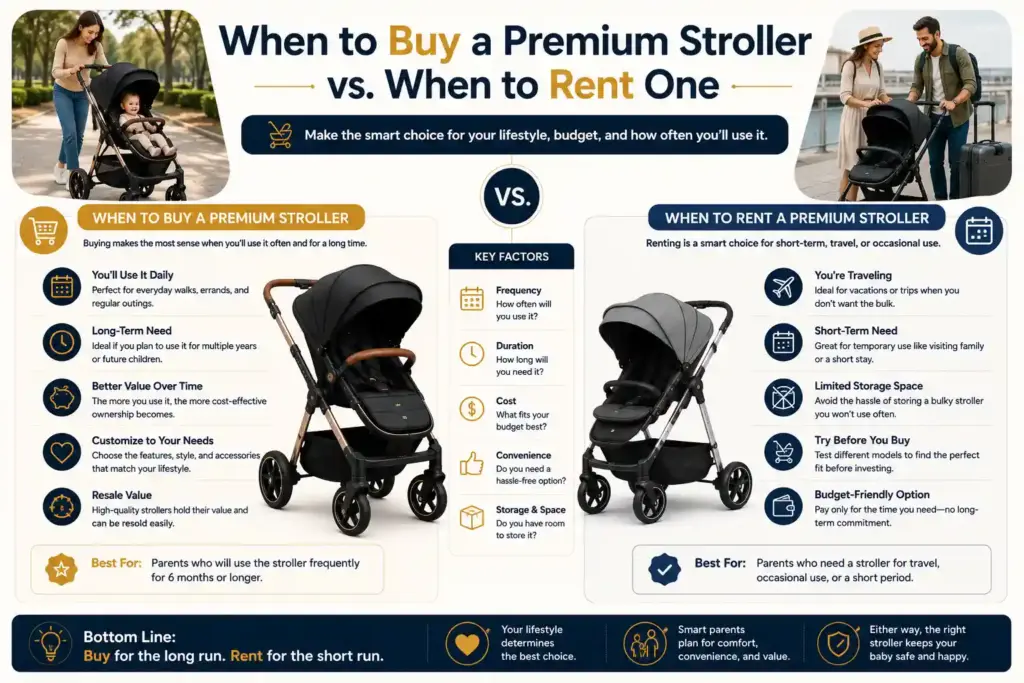
One of the biggest challenges for new parents is deciding whether premium stroller systems are worth purchasing outright.
The reality is that newborn requirements change rapidly.
Renting Makes Sense During the Newborn Stage
For the first six months, parents often need:
- Bassinet systems
- Full-flat recline setups
- Specialised newborn inserts
- Compact travel systems
These configurations are extremely useful for a short period but may not remain necessary once the baby develops stronger neck and core control.
This is where renting through Coodlè becomes practical. Parents can access premium newborn-safe stroller systems without committing to a large upfront investment for short-term usage.
Buying Makes Sense for Long-Term Daily Use
Once your child grows into upright seating stages, purchasing a premium stroller becomes more economical for families who:
- Travel frequently
- Walk daily outdoors
- Need long-term durability
- Plan for multiple years of use
Coodlè offers both premium stroller rentals and verified purchase options, allowing parents to choose based on their child’s developmental stage and lifestyle needs.
Quick Summary of Best Premium Strollers With Car Seat Compatibility
Why Choose Coodlè for Premium Strollers
Finding a genuinely safe premium stroller is difficult because many products marketed as “luxury” prioritise aesthetics over functional engineering.
Coodlè focuses specifically on curated premium baby gear with flexible options for both renting and buying.
What Makes Coodlè Different
- Access to premium stroller brands designed for advanced safety and comfort
- Rental options for short-term newborn needs
- Purchase pathways for long-term use
- Professionally maintained and verified equipment
- Flexibility for parents who do not want to overspend on temporary gear phases
For many families, renting first and buying later is actually the smarter safety decision because it allows parents to adapt the stroller setup to their baby’s exact developmental needs instead of compromising due to cost.
Final Thoughts
A premium stroller should do far more than look stylish or fold compactly. It should protect your child’s airway, stabilise their posture, reduce vibration exposure, maintain structural balance, and operate safely under everyday conditions.
The safest stroller routines are built around consistency:
- Lock the brakes every time
- Keep the harness properly adjusted
- Maintain flat recline for newborns
- Avoid handlebar overloading
- Check wheel stability regularly
- Prioritise ventilation and heat management
Whether you decide to rent during the newborn phase or invest in a long-term premium system, sourcing through Coodlè gives parents access to safer, professionally maintained premium stroller options designed around real-world functionality rather than marketing claims alone.
Final Review: The Daily Pre-Walk Checklist
Before taking your stroller out for a walk, quickly verify these five points:
SEAT RECLINE –> Is it 175-180° flat if the baby is under 6 months?
HARNESS –> Is it flat, un-twisted, and passing the “Pinch Test”?
BRAKE SYSTEM –> Is the parking lock engaged BEFORE loading?
CARGO BASKET –> Are all heavy diaper bags stored in the bottom only?
VENTILATION –> Are the mesh canopy panels open for airflow?
FAQs
Short naps during walks are generally fine, but strollers should not replace a flat sleeping surface for extended sleep sessions, especially for newborns under six months.
A quick brake check should happen before every outing, while wheel alignment, suspension, and locking systems should be inspected thoroughly at least once every 1–2 weeks.
They can be, but only if the frame, harness, brakes, and folding joints have been professionally inspected for wear, damage, or missing parts. This is why many parents prefer verified rental and purchase platforms like Coodlè.
Yes. Larger wheels generally offer better shock absorption and smoother tracking on uneven pavements, reducing vibration transfer to the baby during daily walks.
For many parents, renting is the smarter option for vacations, newborn stages, or short-term city use because it provides access to high-end safety features without long-term storage or investment concerns through Coodlè.